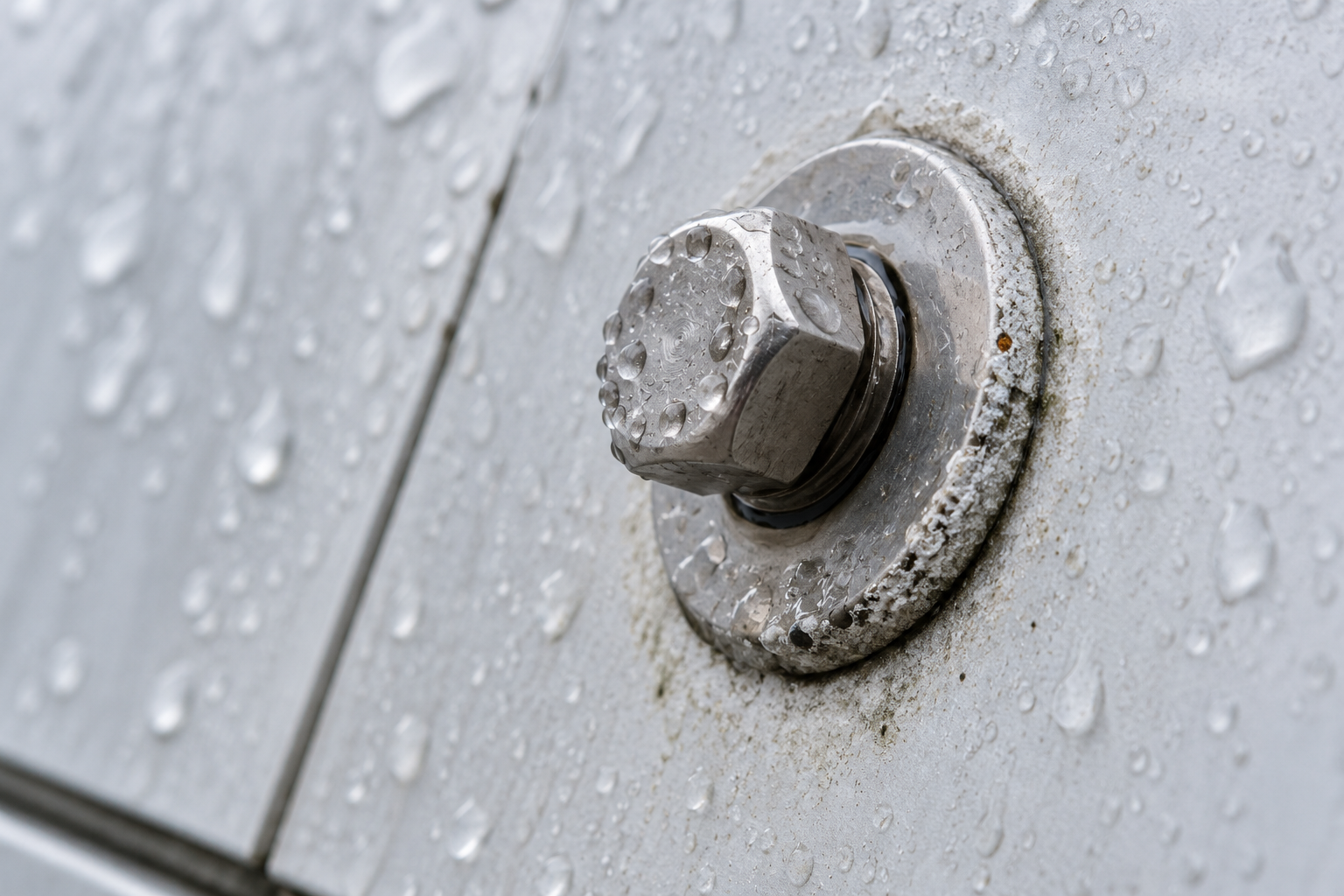
An aluminium panel can look sound until the paint is lifted around a stainless-steel bolt. There, the metal may be rough or pitted while the bolt still gleams. The scene invites a quick verdict: two metals touched, so one of them corroded. Yet the contact is only part of the explanation. A dry joint can hold the same pair for years without galvanic attack. A wet joint can make the area beside a fastener the first place to lose metal.
The distinction matters in a repair. Replacing a damaged bolt, polishing the mark, or choosing a metal advertised as “corrosion resistant” may leave the conditions that caused the damage in place. The useful question is how the whole joint carried electricity, held water and exposed each metal to that water. The Worldstainless guide to contact between metals sets out three requirements for galvanic corrosion: the metals must have different corrosion potentials in that environment, they must have an electrically conductive connection, and a conductive film of moisture must connect their wetted surfaces. Remove one leg of that circuit and this particular mechanism stops.
A small circuit at the surface
Imagine a stainless bolt passing through an aluminium plate on an outdoor railing. Rain reaches the washer and seeps toward the hole. If the bolt touches bare aluminium at the hole or threads, electrons can move through the metals. The damp film around the joint supplies the other path. In many such conditions, aluminium is the anode: it is the side where metal dissolves. The stainless surface acts as the cathode, supporting the companion reaction. The corrosion product might be visible outside the washer, while material loss begins under it or down the hole where inspection is harder.
This is a description of a possible circuit, not a diagnosis from a photograph. Aluminium can pit without a stainless fastener; a tight crevice can hold chemically different water from the open surface; a coating can fail locally. The Worldstainless guide explicitly includes ordinary self-corrosion alongside the extra current caused by a joined pair. To judge an actual joint, one has to look at the metal beneath the mark, the coating, the fastener path and the wetting conditions. A pale deposit alone cannot measure how much sound metal remains.
The phrase “dissimilar metals” can also hide too much. An alloy is not merely its name on a purchasing list. Surface films, plating and the surrounding solution affect its behaviour. NASA’s Fastener Design Manual places active and passive forms of 304 and 316 stainless steel at different positions in its galvanic ranking. Worldstainless warns that a table of standard potentials does not tell a designer how fast a real joint will corrode: the working potentials and the rates of the surface reactions matter. A seawater series describes metals measured in seawater, rather than a permanent order that can be applied unaltered to a dry room, a road-salt splash or a coated panel.
Why the size of each side matters
The same two metals can form very different joints. Put a small aluminium rivet in a large stainless sheet, wet both, and a substantial cathodic surface may drive corrosion onto a very small anodic surface. Put a small stainless fastener into a broad aluminium plate and that current, if it flows, is spread across more anodic metal. The Worldstainless area-ratio examples and NASA’s fastener guidance both make this geometry central to material choice. They explain why a noble fastener on a much larger, more active part is often less troublesome than the reverse arrangement.
“Large” and “small” refer to the surfaces that can take part in the wet cell, not automatically to the mass of the entire components. A coating may leave only a narrow scratch of aluminium exposed. A washer may hold salty water exactly against that scratch. An otherwise broad panel can then present a very small active anode to a larger wetted cathode. The area rule is useful because it asks where the current is concentrated; it is not a promise that every stainless bolt in aluminium is safe.
Water decides whether that geometry becomes consequential. Worldstainless describes a thin condensation film as more resistant to current than salt water, and notes that duration of wetting matters as well as conductivity. A joint under a shelter may remain damp after the face of the panel dries. Dirt and trapped water can extend the time during which the circuit works. In an outdoor repair, it is worth following the path of water past the washer, along the shank and out of—or into—the crevice. The contact line is not the only place to inspect.
Evidence from tests shows why a single material rule is inadequate. In a 1966 NASA experiment, researchers put bare and plated stainless wire inserts into two aluminium alloys, then exposed assemblies to tap, brackish and salt water or salt spray. Silver-plated inserts produced severe attack on the aluminium test blocks, particularly in saline conditions. That was a limited aerospace insert experiment, not a survey of ordinary household fasteners. It demonstrates a narrower point: the finish on the supposedly small, durable part can change the behaviour of the joined metal.
The evidence can be less visible than a crust around a washer. Researchers at Birmingham used X-ray tomography to watch a simulated aluminium–stainless fastener joint under chloride-containing droplets at high humidity. Their reconstruction showed corrosion fissures developing in the aluminium around the embedded stainless cylinder. The experiment used one specified high-strength aluminium alloy, one stainless grade and controlled droplets. It does not predict the damage in a garden gate. It does show why a smooth-looking outside edge may not settle the condition of a fastener hole.
A coating can change the arithmetic
Coatings can interrupt contact with water or change which surface participates, but their location and integrity matter. Worldstainless advises that coating only the anodic member is an unreliable way to prevent galvanic attack. A scratch or pinhole can expose a tiny patch of anode beside a much larger cathode and focus the loss there. The guide instead discusses electrical insulation, keeping the joint dry, and coating the cathodic side or both sides where appropriate. A sound scheme has to account for edges, holes and damage during assembly, not just the broad face that is easy to paint.
One 2020 experiment on coated 7075-T6 aluminium panels and 316 stainless fasteners makes the warning sharper. Of two tested coating systems, the one with lower measured galvanic current suffered deeper, more localised attack; salt spray and immersion also gave different currents. A low overall current was therefore not a simple certificate of a harmless joint in those tests. The finding belongs to those alloys, coatings and exposures. For a repairer, it is a reason to inspect the pattern and depth of loss as well as the condition of the visible finish.
There is also practical evidence for breaking the path. In a 2016 Japanese bridge-railing study, researchers compared aluminium-alloy plates joined with differently treated steel fasteners in 1,000 hours of salt spray. Under their test conditions, zinc-flake-coated stainless fasteners and insulating bushes reduced galvanic attack compared with untreated contacts; coating and alloy choice changed the results. Their artificial spray accelerated exposure, and the combinations were not identical in every other respect, so the results are not a service-life forecast. They do show that details as small as a bush and the condition of a hole belong in the material specification.
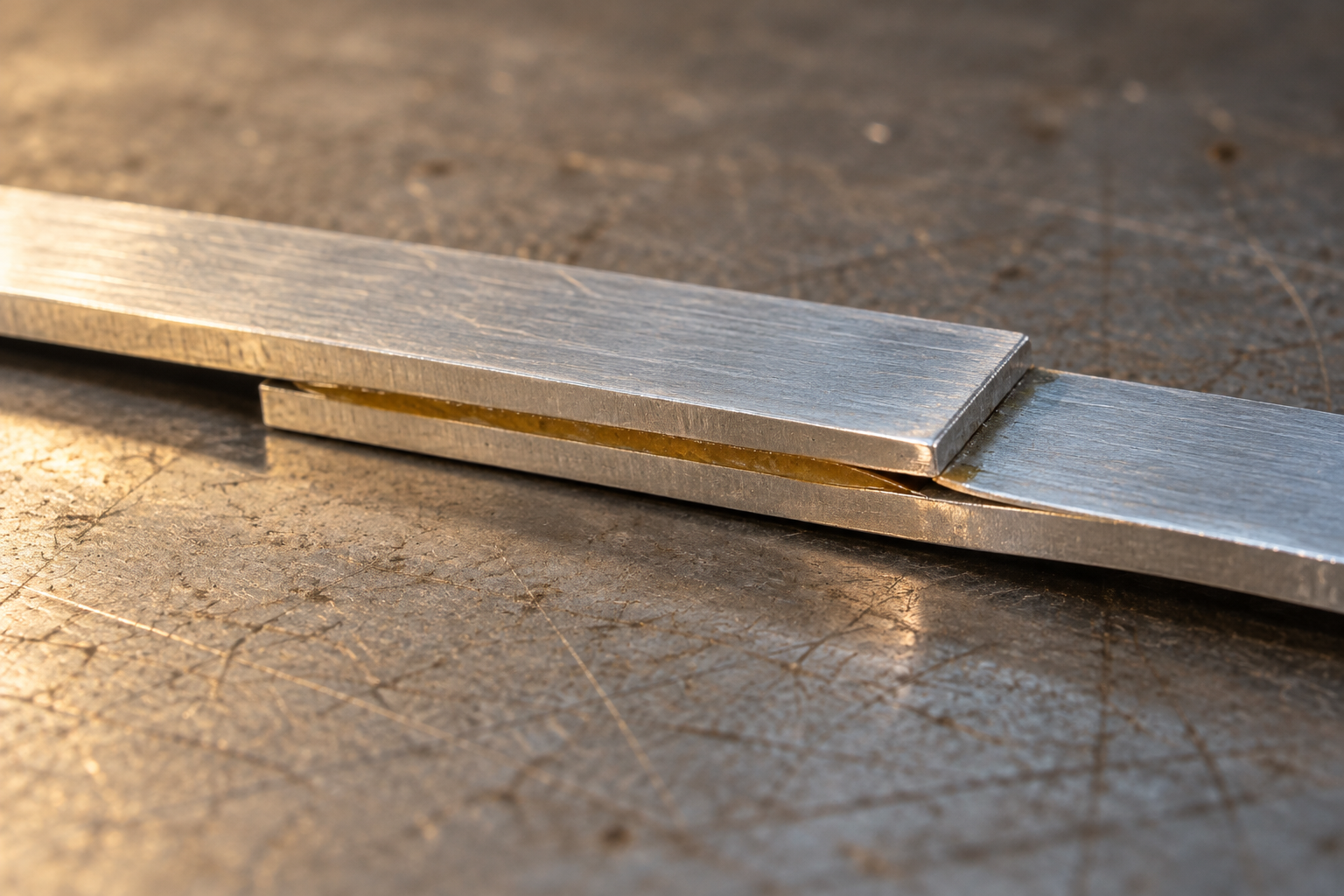
An insulating washer by itself may shield a vulnerable ring without isolating the metals. The bolt can still touch the wall of the hole or the far side of the assembly. The Worldstainless discussion of polymer washers says just that: washers can help cover a risky area even though thread contact remains. Where electrical isolation is the chosen protection, it has to be continuous through the parts that otherwise meet—washer, sleeve or bush, and any second contact path. The joint must still do its mechanical job.
The most durable repair begins with an honest inventory. Identify the two metals and their finishes; find the actual points of metal contact; see where water arrives and how long it stays; examine the hole, not only the bolt head. A designer may choose compatible materials, a qualified insulating detail, a coating system that protects the relevant surfaces, or a joint shape that drains and dries. Which combination is suitable depends on the exposure and on the load the fastener must carry. If a railing or another structural part has lost material at its connection, its strength needs assessment rather than a cosmetic clean-up.
Corrosion has no preference for a prestigious alloy name. It follows a path made by metal, moisture and geometry. A repair succeeds when that path is understood well enough to change it—and when the concealed metal at the joint is still fit to hold what it was meant to hold.
A thought worth keeping?